The international order is gradually shifting away from an integration-oriented approach towards major powers, as described in the previous blog series, and towards an unsettled form of multipolarity. In this environment, major powers compete within an increasingly complex geopolitical landscape without a shared global architecture. This increases the influence of Middle Powers as important “system engineers”. So what holds ASEAN together?
An increasing number of Southeast Asian countries are likely to develop into critically important Middle Powers over the coming decades. They have the potential for high growth due to relatively young demographics, expanding middle classes, rising FDI inflows and generally low levels of public debt. At the same time, they face challenges from climate change, urbanisation, infrastructure requirements and institutional weaknesses, while also risking being forced to choose between the United States and China in specific areas. These countries must therefore balance high growth against sovereignty, geopolitical flexibility, climate adaptation and technological development.
Their most important regional framework is ASEAN. However, the member states have different interests and therefore need to preserve maximum freedom of action. ASEAN is consequently anything but a precursor to a union. It is a framework designed to preserve the strategic flexibility of its members.
In a multipolar world, an important question emerges: how can states cooperate on growth and security without surrendering strategic autonomy? This question is becoming increasingly relevant for countries in Latin America, Africa, Central Asia and the MENA region, all of which must balance external influence against strategic autonomy.
This subject is explored in three blog articles structured around the following questions:
- What holds ASEAN together?
- What divides ASEAN’s members?
- How far can ASEAN’s influence extend?
When the World Fragments, the Value of Cooperation Increases
The world is moving towards greater, yet still unsettled, multipolarity. In this environment, major powers compete without a shared global architecture, increasing the ability of Middle Powers to act as independent actors. This applies to existing Middle Powers such as India, Canada, the EU and Australia, but it applies particularly to the future economic growth engines. Many of these are today members of ASEAN.
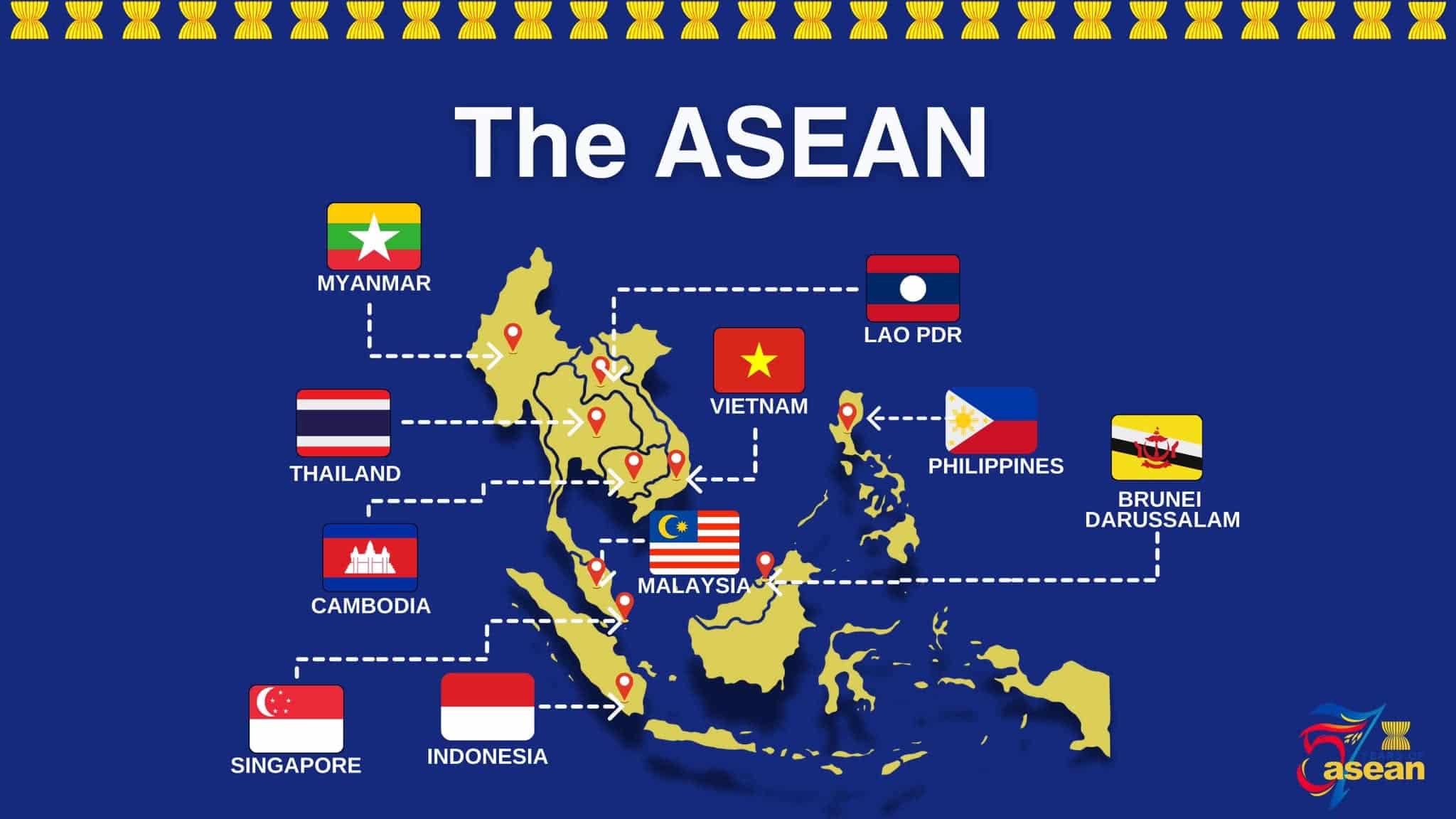
ASEAN was established in 1967 by Indonesia, Malaysia, the Philippines, Singapore and Thailand. It was later joined by Brunei, Vietnam, Laos, Myanmar, Cambodia and Timor-Leste. The organisation was formed during a period characterised by the Cold War, decolonisation and considerable uncertainty regarding great-power influence in Southeast Asia. There was a need for a framework capable of supporting regional stability. ASEAN remains, to this day, a diplomatic platform that reduces the risk of individual member states being isolated and pressured by larger powers in the region, particularly China, the United States, the EU, Japan, India and Russia.
ASEAN Is Designed to Protect Freedom of Action
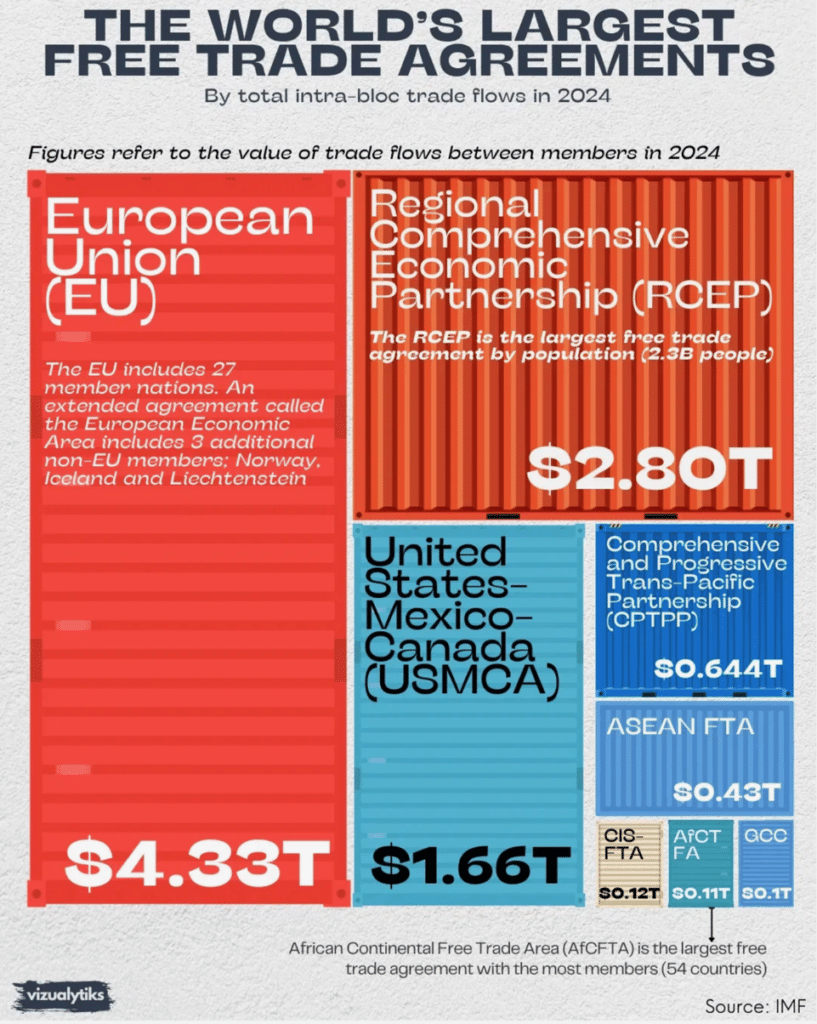
ASEAN focuses on creating a common economic market and an integrated production base for its members. It is one of the most successful regional organisations outside the Western world and is today the world’s fifth-largest free trade arrangement after the EU, RCEP, USMCA and CPTPP, see below.
The organisation seeks to preserve regional peace and stability through principles similar to India’s tradition of non-alignment and strategic balancing. It therefore prioritises strategic autonomy ahead of integration, as sovereignty in relation to major powers has been an existential issue for all members and remains so for most of them today.
Unlike the EU, ASEAN is therefore not built upon shared values or ambitions for deeper integration. Instead, it is based upon voluntarism and consensus. ASEAN members often have very different and deeply rooted interests. Consequently, they prioritise autonomy over integration and cooperation.
In a fragmenting world, the value of institutions increasingly shifts from the global to the regional level. While globalisation was supported by global institutions, regional frameworks become more important as great-power rivalry intensifies.
The Primary Focus Remains Economic Development, ...
ASEAN countries differ substantially. Singapore, for example, is among the world’s most advanced economies, while Laos, Myanmar and Cambodia remain at much earlier stages of development. There are also significant differences in political systems, security interests and historical experiences, e.g. from communistic one-party states such as Vietnam and Laos and to democratic systems such as Indonesia, Philippines and Singapore.
Fra kommunistiske etpartistater som Vietnam og Laos og til demokratiske systemer som Indonesien, Filippinerne og Singapore.
What unites them is therefore largely limited to the pursuit of economic development. This requires attracting investment, strengthening exports, developing infrastructure, improving productivity and increasing prosperity. It requires access to technology, capital and global markets. ASEAN’s scale helps create a framework through which these objectives can be pursued.
... Because All Members Remain Primarily Focused on Preserving Strategic Autonomy
Another important source of cohesion is the desire for geopolitical freedom of action, that is, strategic autonomy.
While Southeast Asia is often portrayed in the West as a region that will eventually have to choose between the United States and China, ASEAN views the world in a considerably more nuanced manner. Its members seek relationships with all major economic centres without becoming exclusive partners of any of them.
Only in this way can they attract portfolio investment from Japan, FDI and OEM investment from the United States and Europe, infrastructure investment and trade from China, and expanding trade with India. ASEAN’s strategic agreements with the United States, China, the EU, India, Japan and Russia should therefore not be interpreted as alliance choices. Rather, they reflect a desire to maintain relationships with all relevant centres of power simultaneously.
- As early as February 2025, ASEAN Chairman and Malaysian Prime Minister Anwar bin Ibrahim stated that “ASEAN’s moment is now”. The statement came at a time when AI competition, the prospect of increasing trade conflicts and broader geopolitical fragmentation were creating renewed demand for regional frameworks capable of attracting investment, production and technology from multiple directions simultaneously.
- The fragmentation between the United States and China has, over recent years, benefited most ASEAN countries. Chinese FDI and trade with ASEAN members have increased several-fold during this period.
- Although ASEAN was formed during the great-power rivalry of the Cold War, the organisation held a summit meeting with Russia in Kazan in mid-June. Despite Russian attempts to portray the meeting as a political alliance, it represented anything but that.
ASEAN’s Strength Is Also Its Weakness, ...
This approach also explains why ASEAN’s decision-making structure is based upon consensus, voluntarism and the principle of non-interference in internal affairs. Respect for member autonomy is necessary to maintain internal cohesion, even if this approach can at times make the organisation appear inefficient and slow.
ASEAN’s resilience stems largely from the fact that its members seek agreement only where it is necessary. This provides the organisation with resilience in the face of political shifts, changing governments and national particular interests.
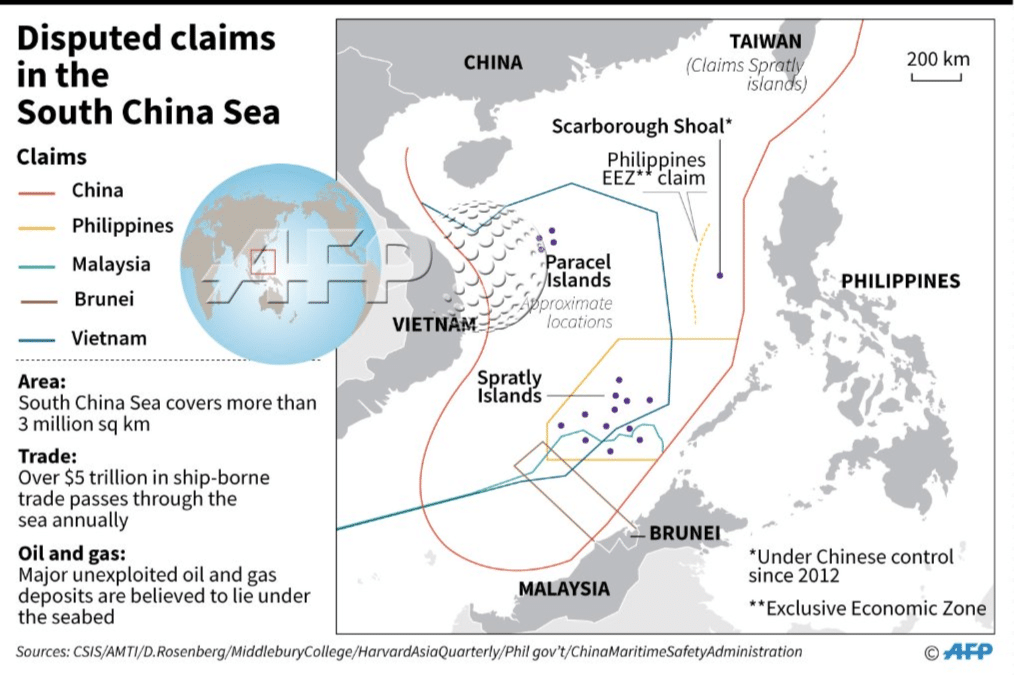
At the same time, it limits ASEAN’s ability to act collectively on issues such as maritime claims in the South China Sea, see below, where several members have overlapping territorial claims.
... But ASEAN’s Structure Is Well Suited to a Multipolar World
ASEAN’s cohesion therefore rests primarily on a shared interest in economic development and the protection of national sovereignty. Its strength lies in the fact that member states seek agreement only where agreement is necessary.
In a multipolar world without a shared global architecture, institutions such as ASEAN become increasingly important. They function as regional system engineers that reduce uncertainty and create cooperation among states with differing interests.
The question, however, is whether these common interests will remain strong enough to hold together member states that increasingly face different security, economic and geopolitical expectations arising from great-power rivalry. That is the subject of the next blog post.