
In recent years, a structural break has emerged in the deeper cohesion of the West, pointing towards a new geo-economic world order. In this system shift, the United States is moving from the role of architect to that of actor. This alters the relationship between the US and its allies, and more fundamentally shifts the foundations of the global order.
The world order since the Second World War was built on institutions and rules, and thus on predictability. The United States was both a central actor and guarantor, as this aligned with its own interests. The MAGA trajectory under Trump, however, assesses the net benefits differently. The model is therefore under dissolution as a result of a deliberate strategic realignment.
The result is an emerging multipolar structure without a shared normative architecture.
The contours of a new world order are outlined in six blog posts
This system shift towards a new geo-economic order is described across the following six blog posts:
- The system shift (from rules to power) – this post
- The erosion of institutions (UN, IMF, etc.) – next post
- The US from system architect to system actor
- The two competing system models: China and the EU
- Middle powers and “value-based realism”
- Financial power and the risk of divergence
The United States has triggered a deep rupture with the order it created
In the Executive Summary of the Munich Security Report 2026, Wolfgang Ischinger opened with the words: “The world has entered a period of wrecking-ball politics”. Such categorical conclusions have been rare among European diplomats since the 1940s. The development reflects that, since 2025, the United States has gradually moved away from the rules-based order of which it was itself the architect.
This makes the order more situational …
The current American MAGA trajectory seeks a significantly higher degree of national autonomy and flexibility. It is grounded in a hemispheric self-perception. This deprioritises institutional commitments and long-term obligations in favour of concrete, situation-dependent gains.
The institutions that previously anchored the global order thereby lose function. Predictability is gradually replaced by case-by-case negotiation.
Few countries have an interest in aligning themselves under such a model. This is the case even though there is broad recognition that the previous order largely reflected Western values.
This leaves a structural vacuum.
… and makes geo-economics the governing logic
In the absence of stable institutional frameworks, geo-economics becomes the most precise reference point for developments. Power is increasingly shaped through control of supply chains, technology, capital, and trade relations.
This implies that:
- political intentions are increasingly assessed through economic behaviour
- alliances are formed around concrete interests rather than shared value systems
- long-term trust becomes more difficult to build
The process is already underway, but it unfolds asymmetrically and at varying speeds.
Strategic autonomy becomes an imperative for all …
Across regions, strategic autonomy has become a central objective. The ability to secure one’s own supply chains and make independent decisions is prioritised more highly than before.
However, no major economy is able to achieve full autonomy in the short term:
- The EU is deeply integrated into global value chains and has reduced its industrial breadth over decades.
- China remains dependent on imports of energy as well as exports of industrial goods.
- The US lacks broad industrial capacity, particularly in advanced precision manufacturing, raw material extraction, and heavy industry.
Globalisation has created efficiency through specialisation. It is precisely this specialisation that now makes adjustment both difficult and time-consuming.
... and therefore more alliances are emerging
Uncertainty regarding future supply has triggered a marked increase in new trade and cooperation agreements. Many of these have been under negotiation for decades but are now being accelerated, often at the expense of broader underlying value frameworks.
The purpose is to:
- reduce dependence on individual markets
- secure alternative supply chains
- build redundancy in critical systems
At Davos, Mark Carney captured the prevailing sentiment with the remark: “Middle powers must act together because if we’re not at the table, we’re on the menu”.
However, the urgency has meant that many agreements have been concluded on relatively loose foundations. They signal direction, but often lack depth and clear enforcement mechanisms. They also frequently lack broader value frameworks, such as environmental or labour standards.
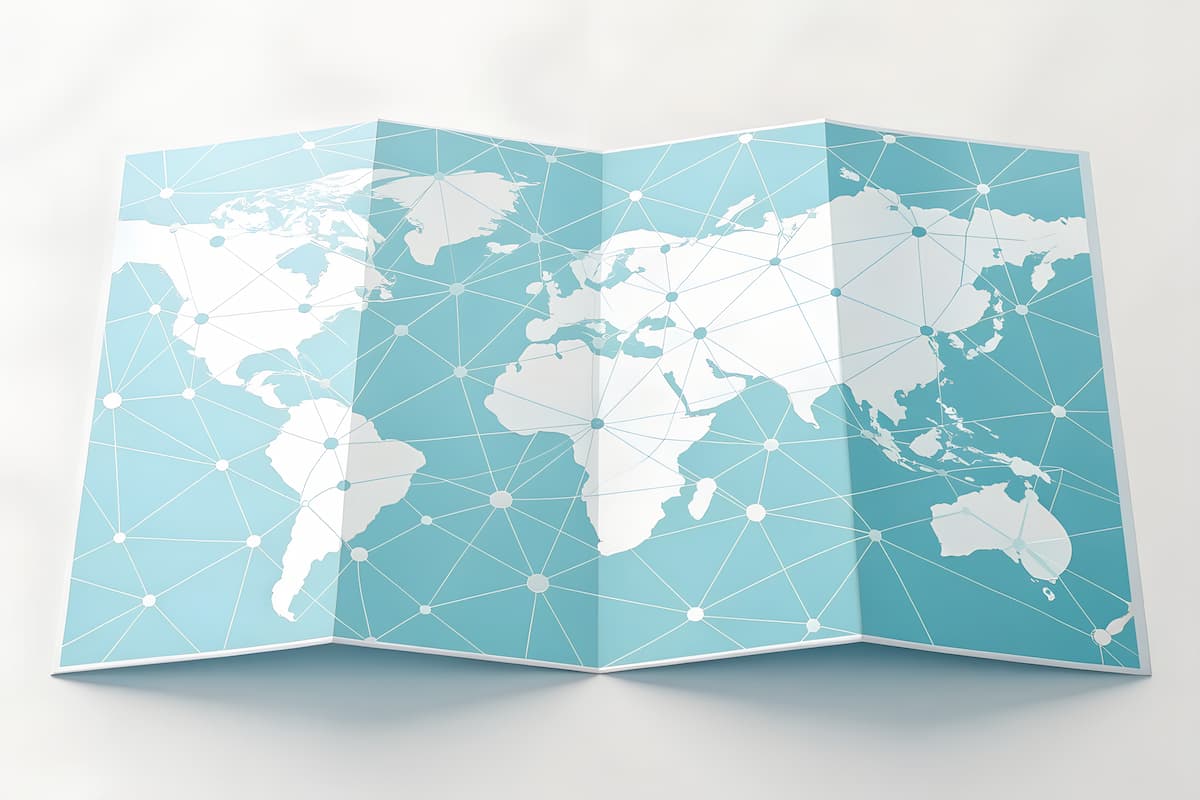
This points towards a more network-based structure, where relationships are more numerous but also more fragmented.
This changes the nature of geopolitics …
Taken together, developments point towards four structural shifts in how geopolitics is conducted:
- from rules to power
- from institutions to networks
- from stability to optionality
- from efficiency to resilience
These shifts occur in parallel and reinforce one another. They reduce predictability while increasing the need for flexibility.
… towards multipolarity without a shared foundation …
While many countries continue to express support for multilateralism, developments point towards multipolarity. The distinction is significant.
- Multilateralism presupposes shared values and institutions.
- Multipolarity can exist without them.
New alliances and agreements are increasingly based on differing, and often conflicting, value systems. This weakens the foundation for global institutions and makes coordination more difficult.
… but in a prolonged transition
The new order does not emerge through a single overarching plan, but through a series of decentralised adjustments. Each country seeks to reduce its own vulnerabilities through what Alexander Stubb has termed “value-based realism”. The sum of these decisions shapes the system.
The process is therefore:
- gradual, yet persistent
- uneven across regions
- characterised by interim solutions
At the same time, there is a growing recognition that the previous order will not return. Even with political changes in individual countries, underlying structures will have shifted.
These shifts affect the strategic degrees of freedom of firms
The world is entering a phase of unresolved multipolarity. Major powers compete without a shared architecture, while mid-sized economies increasingly shape new alliances and forms of cooperation.
For companies and institutions, this implies that:
- predictability declines, which means
- supply chain and market strategies must be reconsidered, so that
- robustness and fallback options take precedence over efficiency alone
The further trajectory will depend to a large extent on how new institutional and financial structures evolve, and whether new shared foundations emerge at all.
To be continued in the next blog post