

Russia’s war calculus has evolved significantly since the start of the war. What initially produced an economic boom has gradually turned into a sustained erosion of Russia’s prosperity and future opportunities. How did the favourable effects dissipate, and what strategic options does this now leave Russia with?
This is the second article in a series of four on the effects of the war in Ukraine on Russia:
- What Is a War Economy
- How the war calculus has evolved
- The current state of the economy
- The long-term outlook
Russia’s “War Calculus” Has Changed Markedly Since the Outset of the War
Russia’s invasion of Ukraine has now lasted four years. For Russia, it has resulted in approximately 1.2 million soldiers killed or seriously wounded. Russia currently occupies roughly 85,000 square kilometres (excluding Crimea), equivalent to around one seventh of Ukraine’s territory or less than half a per cent of Russia’s own landmass.
Although Russia continues to seize additional territory following the consolidation of the front in the summer of 2022, progress has been measured in individual fields and villages. These military advances are exceptionally slow for a war in which roughly half a million soldiers have been deployed over four years. At the peak of U.S. involvement in the Vietnam War in April 1969, a total of 550,000 troops were deployed, including in neighbouring regions. At that point, the war had become economically devastating for the United States.
The war in Ukraine has thus become a war of attrition. This increases the fragility of any future transition back to a civilian economy and, in turn, raises the risk of severe internal political instability at a later stage.
Russia Was Well Prepared; the West Was Not
Russia’s transition to a war economy supported its economy for a surprisingly long period:
- First and foremost, Russia had prepared economically and financially over several decades. Financial autonomy had been increased by reducing external debt (the Soviet Union formally dissolved on 25 December 1991 as a result of its default on debt), public debt had fallen below 20 per cent of GDP, the Central Bank of Russia had accumulated more than USD 600 billion in foreign exchange reserves, and approximately 10 per cent of GDP had been placed in the National Wealth Fund.
- The war economy was further supported by the West’s general slowness in responding beyond freezing roughly half of Russia’s foreign exchange reserves (USD 300 billion, the majority held at Euroclear in Brussels).
- Western trade sanctions were never implemented effectively, a gap Russia was quick to exploit. Russian missile defence systems and weapons such as the hypersonic Kinzhal missile still rely on semiconductors manufactured in the United States and Canada. Western caution was partly driven by concerns over relations with India, which benefited economically from discounted Russian oil and gained a new export market. As a result, secondary sanctions, financial penalties imposed on those assisting Russia, remain weak and ineffective.
- Finally, the EU had continued its gradual military disarmament since 2014, to the point where most member states could no longer credibly defend themselves independently.
Why the War Initially Proved an Economic Gain for Russia
The war caught the West off guard. It took considerable time to understand Russia’s intentions and how Ukraine could be supported effectively. At the same time, extremely high oil and gas prices in 2022 and 2023 provided a substantial boost to Russia’s economy. EU purchases of Russian energy continued largely unchanged.
Since late 2023, however, this dynamic has reversed, and Russia’s economic windfall has dissipated. This coincides with the rising cost and risk associated with a stagnating war, as illustrated in the model above. The value of the “spoils of war” has declined, while Russia’s civilian real assets have steadily deteriorated. Social consequences have intensified the longer the war has continued.
The “Spoils of War” Calculus Has Shifted: Natural Resources, …
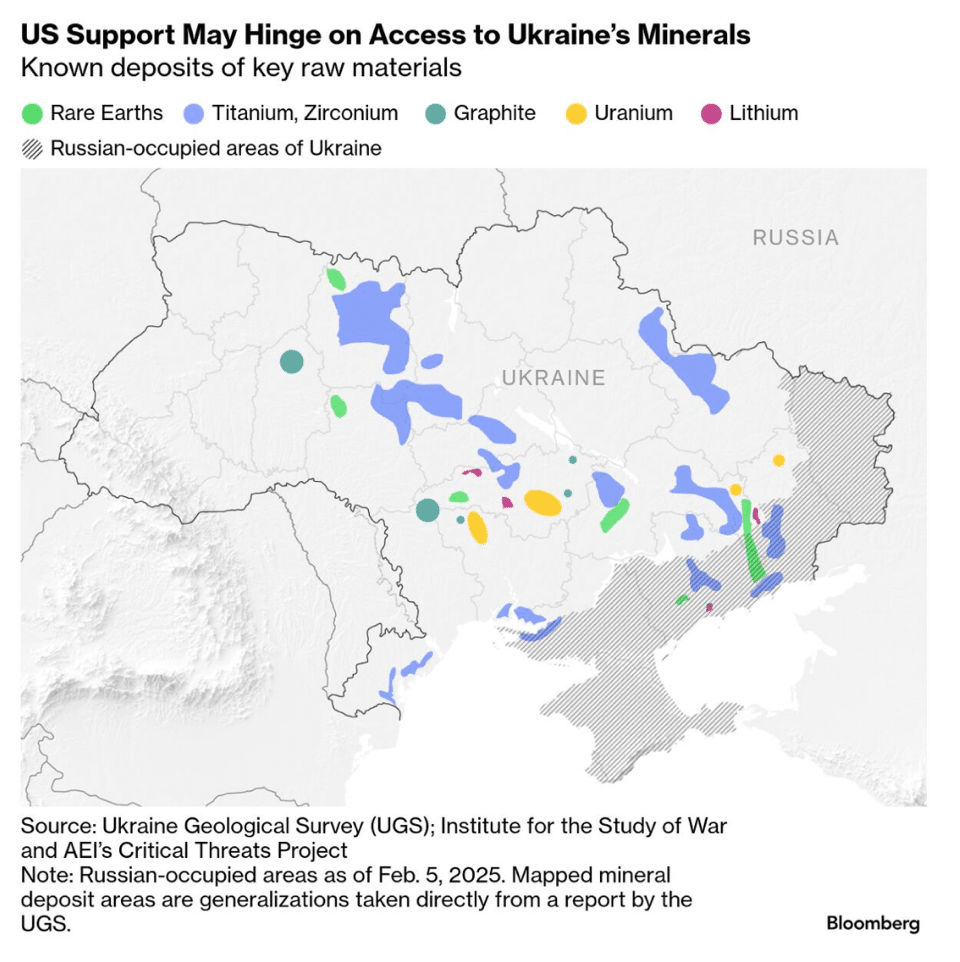
On paper, the spoils of war appeared promising in the form of mineral resources, oil, and wheat, assets of potentially significant geopolitical leverage. In reality, however, enormous investment would be required to generate even modest returns within a decade. The largest cost to Russia is more diffuse: exclusion from international commodity and debt markets.
- In the Donbas region, oil and coal extraction are the only activities that remain economically viable. Russia already possesses abundant oil reserves.
- Ukraine’s most strategically valuable minerals, such as rare earth elements and graphite, are located primarily near Kharkiv and in central Ukraine. Conditional on peace, extraction agreements have been signed with U.S. mining companies (in which the Trump family itself holds investments). The United States is generally determined to secure its supply chains, an argument even cited in discussions about a potential military takeover of Greenland. From this perspective, the U.S. has a strong interest in defending Ukraine, with the exception of Donbas.
--- Agriculture, ...
t will take many years before Russia can cultivate seized wheat fields, repopulate cities, operate steel plants, or extract minerals in the Donbas region. These areas remain within range of Ukrainian artillery, but, more critically, vast territories are heavily mined. CSIS estimates that complete demining of the region could take several decades.
- Russia’s annexation of the strategically important Crimean Peninsula in 2014 was possible largely because Ukraine had not prepared for a military invasion and because the West refrained from providing financial support or isolating Russia economically. Western hesitation was partly justified by the fact that Crimea had only been (re)transferred to Ukraine in 1954, when Nikita Khrushchev reassigned it.
… Access to Export Markets …
Access to the international community is critical for Russia’s civilian economy, which remains heavily dependent on exports of raw materials and energy. Western sanctions have been only partially effective, forcing Russia to accept settlement of oil exports to India and China in rupees and renminbi, at an effective discount of approximately 23 per cent relative to Brent crude (the “Urals” price).
- At the start of the war, Russia rapidly redirected oil exports to India and China. Both countries, however, have long histories with Russia marked by deep mistrust and painful conflicts. As a result, they import Russian energy only while discounts remain substantial and while it serves their geopolitical interest to keep Western attention focused on Russia. This helps explain why BRICS+ cooperation has made limited progress over the past four years beyond expanding membership. Russia has long sought deeper integration, yet even basic issues such as international settlements have seen little advancement, an outcome that directly undermines Russia’s strategic autonomy.
… and Access to International Credit Markets
Neither the EU nor the United States has been fully effective in excluding Russia from international financial and energy markets. In 2024, EU member states provided EUR 19 billion in aid to Ukraine while paying EUR 22 billion to Russia for energy via the TurkStream and Druzhba pipelines. Under the REPowerEU plan, the EU aims to cease all imports of Russian energy by 2027.
- Russia has been able to redirect oil exports, but it can redirect only around one fifth of its natural gas exports.
The Russian Duma Has Adopted Confiscation Legislation
Since 2023, President Putin has issued decrees permitting the confiscation of assets owned by “unfriendly” countries. In January of this year, the Duma elevated these measures into permanent legislation. The Atlas Institute expects this to slow Chinese and Indian foreign direct investment. Yet Russia is increasingly dependent on Chinese and Indian technology and consumer goods.
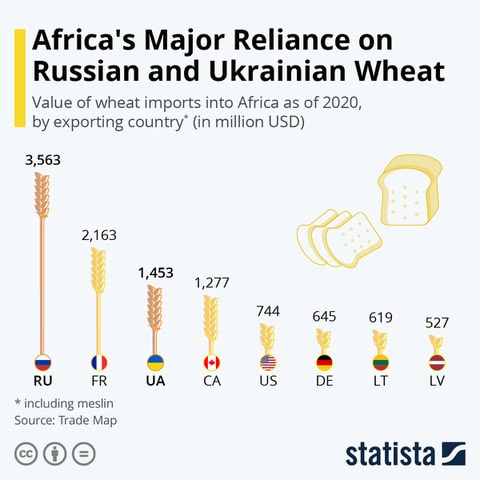
- African countries have generally supported Russia, despite Russia often being their primary competitor in mineral and energy extraction. This reflects Russia’s image as a smaller challenger willing to defy both the United States and China. Unlike the EU, Russia does not attempt to influence African governance standards or environmental and human rights practices. Moreover, Russia’s relatively modest economic size, its GDP is smaller than Italy’s, can be more easily overlooked.
- Fundamentally, however, Russia remains a major exporter of essential wheat and fertilisers.
A Response to Growing Industrial Degradation …
There is a fundamental distinction between military and civilian industrial assets:
- According to ISW, Russia’s military-industrial complex has now been reconfigured to fully replace matériel losses at the front. During the transition period, Russia drew heavily on vast and ageing military stockpiles. T-54 tanks from the 1940s and 1950s are still being deployed, though in declining numbers—an indication that legacy reserves are being exhausted and that newer equipment will increasingly be committed. Russia’s drone technology is now on par with that of Ukraine and the West and has achieved sufficient scale to build inventories.
- Civilian industry, however, has been systematically converted to military production. Armoured vehicles are now produced in factories that once manufactured cars.
- There are signs that the limits of industrial conversion are being reached, most notably acute labour shortages. Russia has therefore begun inviting guest workers from Africa.
… Converted and Undermaintained
Before the war, Russia’s industrial exports focused primarily on energy, basic industrial goods, and, to some extent, military equipment.
The military sector has strengthened as a result of the war, becoming more technologically current and expanding capacity. However, it has also become critically dependent on Chinese exports, particularly semiconductors that Russia cannot produce domestically. Russia has set an ambitious goal of becoming a global leader in semiconductors and artificial intelligence. Achieving this goal depends on parallel imports from friendly countries. In practice, Russia has very few true allies , and for historical reasons this does not include China.
The energy sector, by contrast, has deteriorated significantly. Investment in natural gas has declined as export volumes and prospects diminish. This includes Nord Stream 1 and 2, in which Gazprom held majority stakes prior to the September 2022 sabotage. It also includes Power of Siberia 2, where price negotiations with China revolve around levels only marginally above Russia’s extraction costs. Russia must also bear almost the entire capital investment for the 2,600-kilometre pipeline. The result is an agreement that is economically disadvantageous for Russia but provides short-term cash flow from China. Russia’s LNG exports are also constrained by insufficient liquefaction capacity.
… Particularly in Broader Infrastructure
Russia’s territory has largely escaped direct war damage. However, there are no comprehensive, data-driven assessments by international organisations regarding the extent of degradation in Russia’s infrastructure, roads, utilities, and real estate stock.
- Estimates from ISW and the UK Ministry of Defence nevertheless suggest extensive underinvestment. Construction sector statistics and the degree of civilian industrial conversion indicate that maintenance spending over the past four years has been roughly half of pre-war levels. Russia is thus accumulating an increasingly large backlog of deferred maintenance.
Russia’s supply lines are also at risk. Baltic states have begun intercepting vessels suspected of sabotaging fibre-optic cables. Ukraine has started attacking tankers returning for refuelling. The United States has suggested it may tolerate pirate attacks on vessels trading with Russia. Such developments could disrupt imports of consumer goods and exports of wheat, nickel, and copper. Russia’s navy is far too small to provide credible protection for civilian shipping.
The Largest Bill Has Yet to Become Visible …
The social consequences may represent the greatest long-term risk.
- Demobilised soldiers: In Afghanistan, Soviet casualties including severe injuries totalled around 10,000. In Ukraine, the figure now approaches 1.2 million, including up to 50,000 from North Korea and China. For this reason alone, Putin must demonstrate some form of victory in Ukraine; failure would be humiliating for both North Korea and China.
- Deserters and refugees are estimated at between 50,000 and 100,000,equivalent to 10–20 per cent of deployed Russian forces.
… and Could Potentially Fracture Society
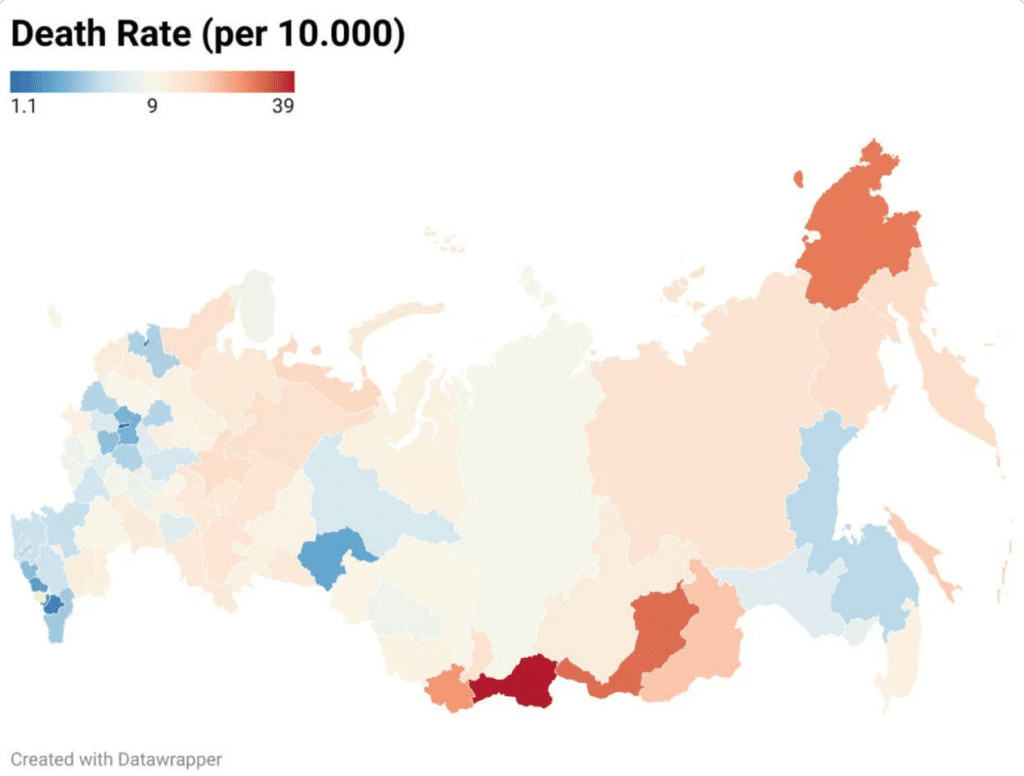
Asymmetric casualties: According to Western intelligence assessments, fatalities in the war are disproportionately drawn from Russia’s eastern (Siberian) and southern regions, including Tuva, the home region of Putin’s former close ally Sergei Shoigu. These regions already exhibited the strongest secessionist tendencies. By contrast, casualty rates around Moscow and St Petersburg remain very low.
- Will this intensify secessionist pressure in peripheral regions following a ceasefire or peace agreement? Alternatively, does it render these regions militarily vulnerable, for example, unable to defend themselves against a potential Chinese “reunification” with Outer Manchuria (including Khabarovsk and Vladivostok), a theme China has repeatedly revisited in recent years.
This Produces a Political Risk and Thus Centralisation of Power
These risks have prompted Putin to further centralise political power within his own family. Russia’s internal oversight functions are now dominated by the Putin family. This includes figures such as Kirill Dmitriev, Russia’s peace negotiator, who has close ties to Jared Kushner and to Putin’s daughter, Yekaterina Tikhonova, and now plays a central role alongside Sergei Lavrov and Yuri Ushakov. It also includes Sergei Tsivilev, who oversees figures such as Igor Sechin (Rosneft), Alexei Miller (Gazprom), and Gennady Timchenko.
The greater the degree of control and centralisation, however, the weaker the feedback loop and the poorer the quality of Putin’s decision-making. Over time, this creates a deep and systemic risk of strategic misjudgement, reminiscent of the late Soviet period.
For the West, this increases the likelihood that any peace agreement over Ukraine would merely constitute a pause, used by both sides to rearm. For Russia, this is a political necessity to avoid internal fracture. For the West, it is a requirement for credible self-defence.